Results in Under 5 Seconds
Drop in a track and the key, BPM, and Camelot code show up before you can switch tabs. No progress bars, no waiting around.

We ran a handful of tracks through the detector so you don't have to take our word for it. Key, BPM, Camelot code — check the results yourself.
No music theory, no desktop app, no command-line nonsense. Open your browser, drop in a file, and read the results.
Drag an MP3, WAV, FLAC, or M4A into the upload area — anything up to 50MB. Got a file hosted online? Paste the direct URL and it works the same way.
The AI reads your track and hands back the musical key, tempo in BPM, and Camelot wheel code. Most files are done in under 5 seconds.
Copy the results into your DAW, DJ software, or playlist notes. Or stick around — you can remix, master, or generate new music right here on BeMusic.
Knowing the key and tempo of a track changes everything — how you mix, how you remix, how you practice. Here's how people actually use this BPM and key detector.

Stop guessing which tracks go together. Get the Camelot key and BPM of every song in your library so your transitions sound smooth — not like two songs fighting each other.
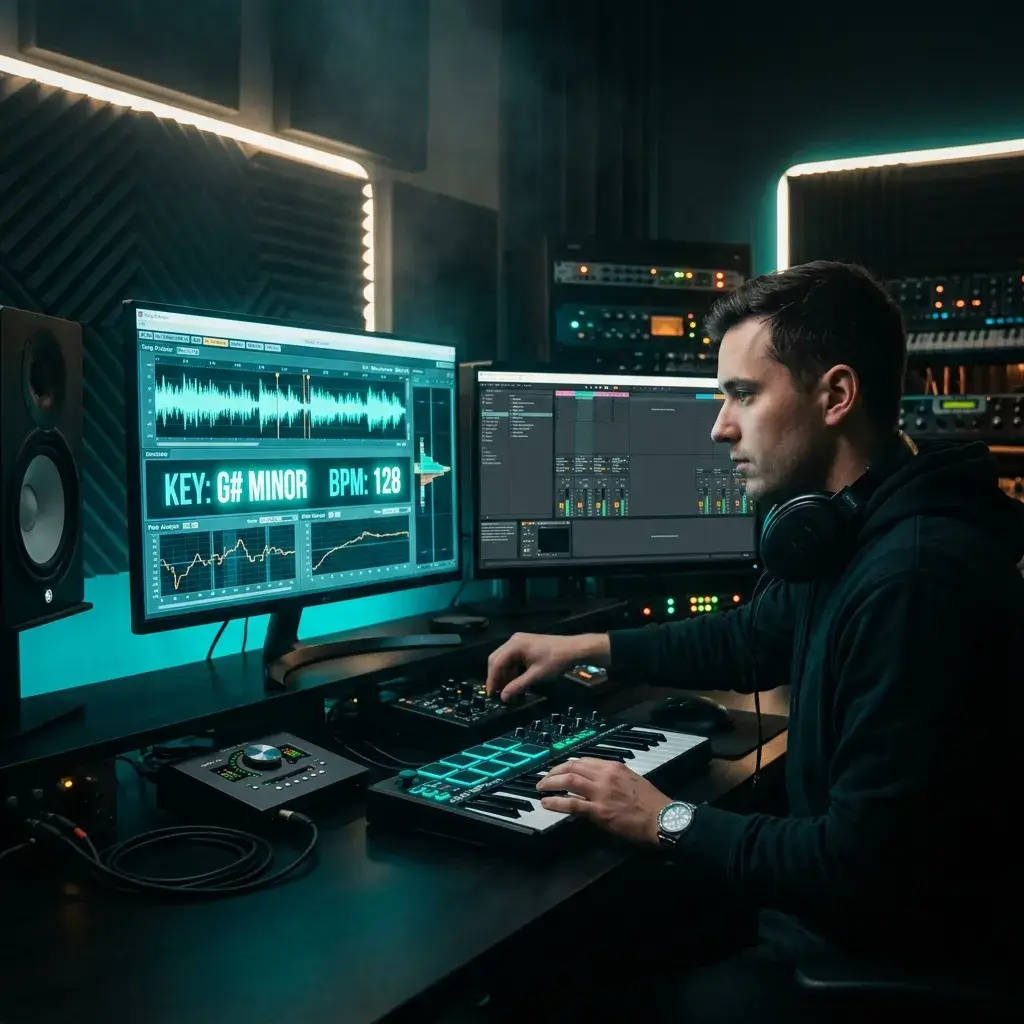
Before you chop a sample or layer a vocal, you need to know what key it's in. Upload the source, grab the data, and build your remix on solid ground instead of guessing.
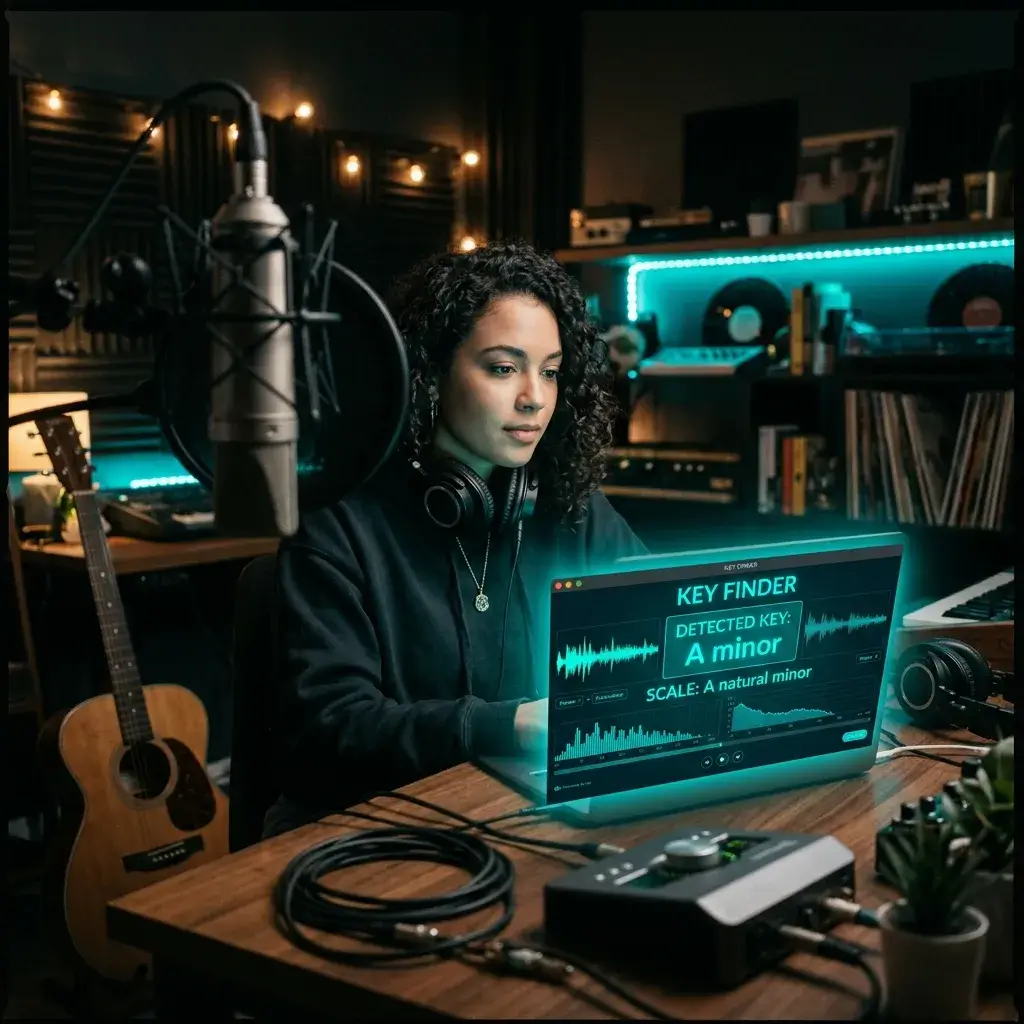
Trying to figure out the key of a song so you can sing it in your range? Upload it, see the key, transpose if you need to. No more fumbling around on a piano trying to match the pitch.
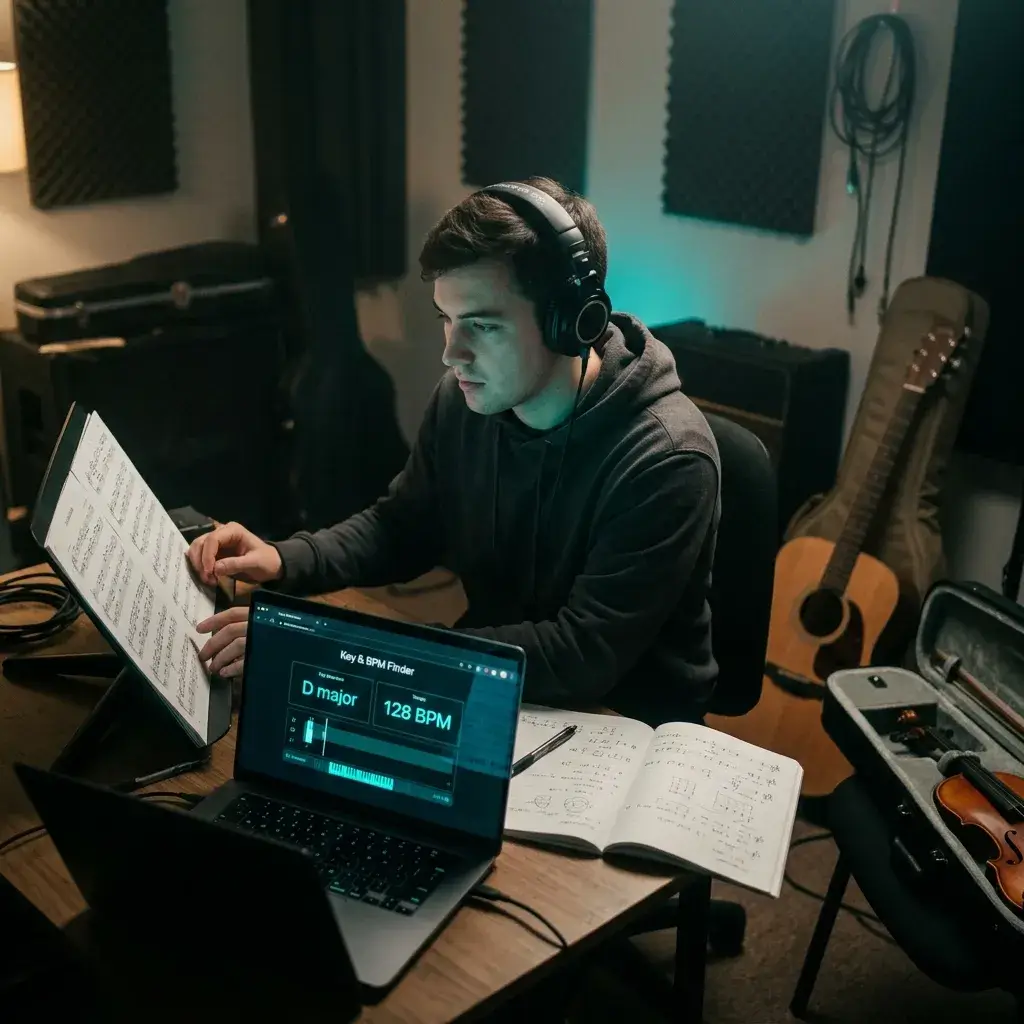
Teachers and students use this to check what they're hearing. Upload a piece, confirm the key and tempo, and train your ear against something you can trust.
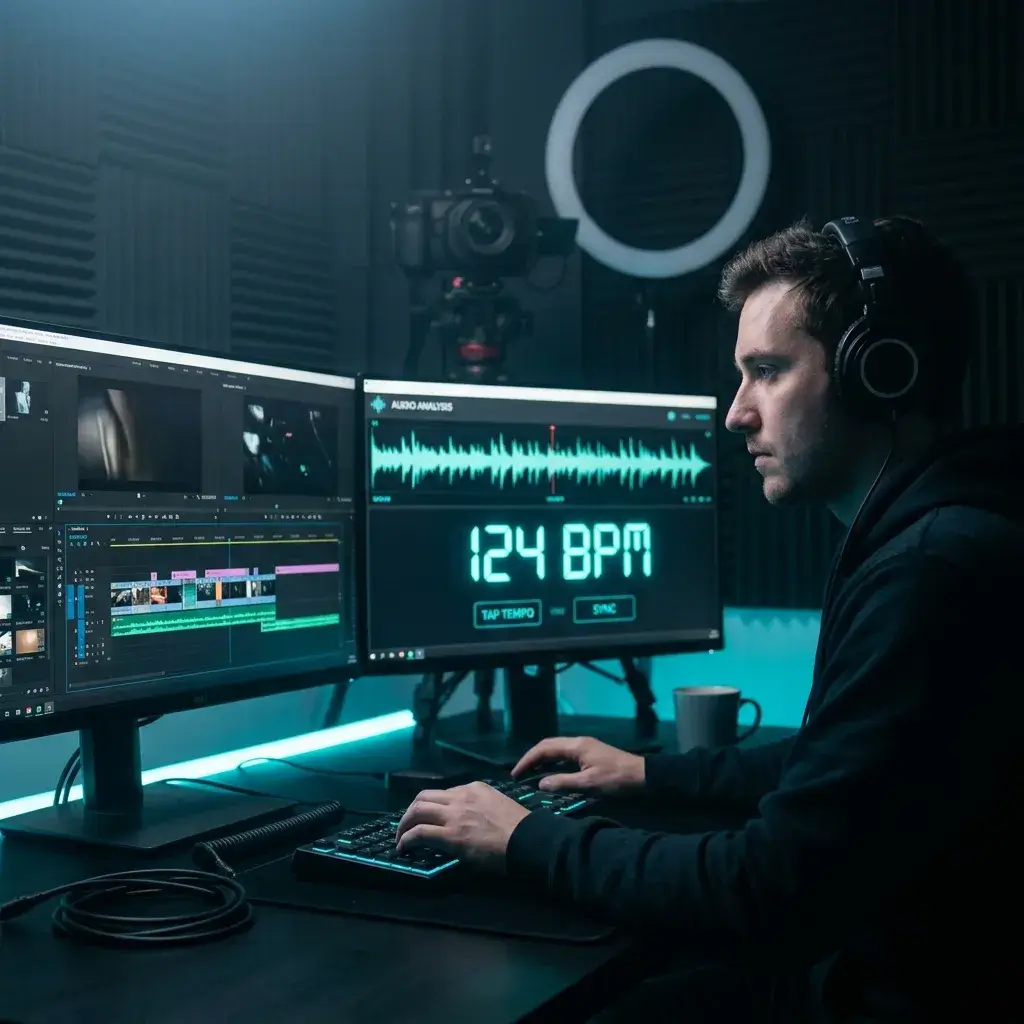
Need background music that matches a specific tempo? Analyze your reference track first, then pick or generate something that actually fits your edit — instead of eyeballing it.

Tag every track in your collection with its key and BPM so you can pull up compatible songs in seconds. Way faster than scrolling through a messy folder when you're building a set.
It's quick, it's accurate, and it plugs into a full music toolkit. Here's why people keep coming back instead of using other BPM detectors.
Drop in a track and the key, BPM, and Camelot code show up before you can switch tabs. No progress bars, no waiting around.
The engine is trained on millions of tracks. It deals with key changes, complex rhythms, and live recordings — not just clean studio mixes.
Every result comes with the Camelot key right next to the standard musical key. DJs can go straight from analysis to harmonic mixing without converting anything.
It runs on anything with a browser. No desktop app, no plugins, no messing with Python or command-line tools. Upload, analyze, done.
Tracks may be retained for up to 30 days after processing, or until you delete them earlier. They are shared only with providers needed for the analysis and are not used to train shared AI models without your explicit opt-in.
Upload whatever format you've got. Lossless files give slightly sharper results, but compressed formats work fine for everyday analysis.
Analyze your first tracks without signing up or handing over an email. When you want batch analysis or result history, a free account unlocks those.
Once you know the key and BPM, you can remix, master, split stems, or generate new music — all without leaving BeMusic. No more bouncing between five different apps.
DJs, producers, and musicians use this key and BPM finder every day. Here's what a few of them think.
I tag every track with its Camelot key before a gig. This gives me the key and BPM in seconds — faster than Mixed In Key and I don't have to install anything.

Carlos Medina
Club DJ, 8+ Years
I sample a lot of vinyl rips and random audio. Being able to drop a file in and instantly see the key saves me from pitch-guessing every single time. Huge time saver.

Aisha Patel
Bedroom Producer & Beatmaker
Students send me songs they want to learn. I run them through the key finder, confirm the key, and we're playing along in the right pitch within a minute. Couldn't be simpler.

Tom Eriksson
Guitar Teacher & Session Musician
Had to match background music tempos across a 10-episode series. Analyzed all my reference tracks in one sitting — every BPM was spot on. Saved me an entire afternoon.

Mia Zhang
Podcast Producer & Video Editor
The stuff people usually want to know before they analyze their first track.
Just upload your audio file — MP3, WAV, FLAC, or M4A — to the analyzer above. The AI picks up the musical key, BPM, and Camelot notation automatically, usually in under 5 seconds. No music theory needed.
Yep. You can analyze tracks without paying or creating an account. Free usage has a daily limit. If you need more, paid plans are available.
Honestly? For well-mixed studio recordings, it's very accurate. The AI is trained on millions of tracks across genres. Tracks with key changes, heavy distortion, or really sparse arrangements might produce less certain results — but that's true of every key detection tool out there.
The Camelot wheel maps musical keys to simple numbered codes like 8A or 11B. DJs use it for harmonic mixing — blending tracks in compatible keys so transitions sound smooth instead of clashing. Every analysis here includes the Camelot code right next to the standard key.
MP3, WAV, FLAC, and M4A — up to 50MB per file. Lossless formats like WAV and FLAC tend to give slightly sharper results, but compressed MP3s work fine for everyday use.
Nope. You can analyze tracks right away without signing up. Creating a free account unlocks extras like batch analysis and result history, but it's totally optional.
Files may be retained for up to 30 days after processing, or until you delete them earlier. They are shared only with providers needed for the requested analysis and are not used to train shared AI models without your explicit opt-in.
You can, yeah. Batch analysis is available for registered users. Upload a bunch of files and get key, BPM, and Camelot data for each one in a single session.
BPM stands for beats per minute — it tells you how fast a song is. DJs use it for beatmatching, producers use it to sync loops and samples, and video editors use it to cut on the beat. Knowing the exact number takes the guesswork out of all of that.
It returns the dominant key of the track. If a song modulates between keys, you'll get the one that shows up most. For tracks with a lot of key changes, try analyzing individual sections separately — you'll get more precise results that way.
Tunebat locks energy and danceability metrics behind a paywall. Mixed In Key is a paid desktop app you have to install. BeMusic gives you key, BPM, and Camelot notation for free in the browser — and connects to a full toolkit for remixing, mastering, and music generation when you want to go further.
Not directly from a link — you'll need the actual audio file. Download the track first, then upload it here. The analyzer handles all the common formats and gives you results in seconds.
It's when you blend songs that share compatible musical keys so transitions sound natural instead of jarring. The Camelot wheel makes it dead simple — just match the numbers or move one step in any direction.
Not at all. Upload a file and the tool tells you the key, BPM, and Camelot code. If you're a DJ, the Camelot number is all you need. If you're a musician, the standard notation (like A minor or E♭ major) is right there too.
Absolutely. Copy the key and BPM values and plug them into Rekordbox, Serato, Traktor, Ableton, FL Studio, Logic Pro — whatever you use. The data is standard, so it works everywhere.
It does, though you'll get the cleanest results from studio recordings. Live tracks with crowd noise or heavy reverb might give less certain key estimates. BPM detection tends to stay solid even with rougher sources.
A lot, actually. Use the key for harmonic mixing in DJ sets, transpose a song to fit your vocal range, sync samples in your DAW, or generate new music in the same key right here on BeMusic. The analysis is just the starting point.
No app needed. The whole thing runs in your browser and works on phones, tablets, and desktops. Just open the page, upload your file, and you're good.
Have more questions? Contact our team — we're happy to help.
Discover other powerful features to enhance your music creation
50,000+ DJs, producers, and musicians already detect key and BPM before every mix, remix, and session. Drop in a file and hear for yourself.